

Ara Giaquinto1, Naman Raina2, Varun Seshadri3
1 Department of Quantum Mechanics, ISKL
2 Department of Theoretical Mathematics, ISKL
3 Department of Relativistic Mechanics, ISKL
Abstract
The application of de Broglie wavelengths to macroscopic objects seems impossible, however by optimizing for a slow enough velocity, a passage of time with a new unit may be established regarding the time taken for an object to diffract through an opening comparable to its original size. The purpose of this research paper is to challenge institutional norms, and to analyze the implications of macroscopic/multiparticulate diffraction.
1. Introduction
1.1 Background
It is well known that the conditions for diffraction are such that a wave’s wavelength must be comparable in size to the slit in which it is diffracting through. Such phenomena are commonly visualized through photon diffraction, as observed in Young’s double slit experiment. However, contrary to belief at the time of Young, photons were not the only particles capable of undergoing diffraction. Louis de Broglie theorized that every particle with a certain momentum



Although it is quite explicitly stated that such an equation only applies to quantum point-particles, and certainly not towards large macroscopic structures, let alone groupings of particles, this groundbreaking new research states otherwise.
1.2 Alpha Particle Diffraction
During the Rutherford gold foil experiment, alpha particles are sent to bombard a thin grid of evenly-spaced gold atoms. The key observation, however, is that these alpha particles


1.3 Macroscopic Application
A more rudimentary macroscopic approach to diffraction may bring to mind the examples of waves traveling through the ocean, and diffracting between rocks. Although an interference pattern may be observed, assuming the source is coherent, such diffraction does not occur via the laws of quantum mechanics. The de Broglie approach may at first seem to only apply to subatomic particles, however this is simply not true, as proven later on in Section 3 of the paper. With the understanding that the wavelength is proportional to the reciprocal of the velocity, via


2. Theoretical Approach
2.1 Scenario One: Naman Raina
The studied object throughout this particular scenario within the investigation will be none other than Naman Raina, esteemed mathematician at the prestigious International School of Kuala Lumpur. Naman Raina is allegedy a macroscopic object, classified as the species H. sapiens’, under the genusHomo’. Raina is indeed a multiparticulate object, experimentally greater in sheer quantum particle number than an entire alpha particle. Hence, a certain velocity will be deduced for which Raina will have to travel at in order to undergo diffraction. Subsequently, the time taken to diffract through this theoretical aperture will be calculated.
2.2 Example Calculation
The first trivial variable that must be deduced is Raina’s mass. This has been provided to be approximately


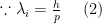


Hence, by substituting the respective values into the right-hand-side, we find that:





The unit conversions between lines 5 and 6 are trivial and left as an exercise to the reader. Thus, from the result in line 7, it is seen that it is actually possible for Naman Raina to exhibit wave-like properties, assuming he can be treated as a single particle, traveling at a mere





2.3 Defining the Raina Limit
With this new understanding that there is a minimum velocity requirement as per the laws of quantum physics, such that no particle/object may travel slower than







From this, it can be observed that an object’s mass times its wavelength can be equated to a certain constant, which will be established as the Raina limit (


In this case,


Impossible: The product of an object’s mass times its de Broglie wavelength yields a value greater than


Possible: The product of an object’s mass times its ideal de Broglie wavelength yields a value less than or equal to
2.4 Defining the Universe Time Unit
All seems to be well, however what is being blatantly ignored here is the time period requirement for which it would take Raina to diffract into. To complete the passage through a slit which is as thick as Raina’s body (stomach-to-back), he would have to travel a distance of approximately


To convert this figure in terms of scalar multiples of a more manageable unit of time, such will be equal to scalar multiples of the estimated age of the observable universe, which according to various sources appears to be





Hence, the amount of time required for Naman Raina to diffract through a slit in the fetal position would require a time span equivalent to around


3. Further Investigation
3.1 Scenario Two: Red Blood Cells
This scenario involves the diffraction of a single red blood cell. With an estimated diameter of around





The condition for the Raina limit has been met, and thus, red blood cells may be diffracted. By applying this to the result from line 4, we find that:




Thus, the time taken for such an object to diffract, assuming a perfectly circular blood cell is passing through with the flat side’s normal vector parallel to the surface of the slit, we find the following:



And now to convert in terms of





Hence, the time taken for a red blood cell to diffract through a comparable slit would only take


3.2 Scenario Three: Generic Enzymes
This scenario involves the diffraction of a generic enzyme. With an estimated diameter of around



Hence, we can test whether the enzyme satisfies the conditions for the Raina limit:




The condition for the Raina limit has been met, and thus the object may be diffracted. By applying this to the same relation derived in line 4, we find that:




$latex Thus, the time taken for such an object to diffract, assuming a perfectly circular enzyme is passing through the slit, we find the following:


And now to convert in terms of



Hence, the time taken for the smaller generic enzymes to diffract through a comparable slit would only take


4. Implications of Macroscopic Diffraction
4.1 De Broglie Interference of Naman Raina
Producing a coherent source of identical, polarized Naman Rainas (meaning oriented in the same plane as the aperture in which he is passing through) upon two apertures, then assuming all particles collide with one another at the exact same interval (hence treating Raina as a single, large particle), with both Rainas being in-phase (path difference =


From this event, it could be expected according to Feynman diagrams that the annihilation will release a massive amount of energy from the possible gamma ray emissions. In more practical terms, however, the annihilation process would emit a significant number of gluons, and hence may potentially be a less costly alternative than kilometer-long particle accelerators for the production of glueballs; hypothetical composite particles consisting solely of gluons. Unfortunately, it would be an extremely difficult task to ensure that all particles annihilate one another at the exact same interval, hence calculating the energy released from this theoretical de Broglie interference would have no practical applications whatsoever, unlike the other sections of this research paper. Naman Raina may not be treated as a single particle with a radius of
If such interference were possible, however, then a coherent source of Naman Rainas traveling through two apertures would result in a particular interference pattern projected onto a screen. To determine the nature of this interference pattern, however, Naman Raina’s theoretical angle of diffraction must be calculated; this is analogous to the occurrence of the first minima present in single slit diffraction. Nevertheless, in order to calculate Raina’s angle of diffraction, assuming that his diameter


Therefore, it can be stated that Raina would have a


Again, due to the non-negligible slit width, it is possible to modulate the double slit intensity curve so long as the values for the first instance of diffraction minima are solved. In this case, doing so was relatively simple, as can be seen from line 44. Moreover, it is especially necessary to account for slit width with macroscopic/multiparticulate diffraction, since it not only renders the theory more applicable within the context of the real world, but also increases the plausibility of macroscopic diffraction as the objects crossing through the aperture are not point-particles themselves, and have a non-negligible size.
Hence, with the new understanding from Figure 1 of how Naman Raina will diffract upon a slit comparable to his ideal de Broglie wavelength


Therefore, although a coherent source of Naman Rainas will most likely direct them straight towards the center of the screen, there is a probability that he may also be found at the other intensity maxima, where constructive interference occurs, and the Rainas essentially group’ together. As this diffraction process assumes that Naman Raina may be treated as a particle, the biological implications of superpositioning two Naman Rainas onto one another are unknown, and could potentially be a further area of investigation. Furthermore, the seemingly empty regions between adjacent intensity maxima are the regions of destructive interference, where two out-of-phase Rainas by a factor of


4.2 Feasibility of Enzyme Diffraction
Although a paper from the AMFEP titled “Why Enzyme Substances Are Not Nanomaterials” states that microscopic enzymes within this



5. Conclusion
Thus, through our deep and insightful investigation, we can conclude that while somewhat unlikely, through pure physics it is absolutely possible for Naman Raina to diffract (among other macroscopic objects), as he meets the
6. References
- Ableev, V. G. et al. Diffraction Scattering Of Alpha-Particles On Nuclei At 17.9 Gev/C”. Zeitschrift Für Physik A Hadrons And Nuclei, vol 340, no. 2, 1991, pp. 191-197. Springer Science And Business Media LLC, doi:10.1007/bf01303832. Accessed 15 Apr 2021.
- Association of Manufacturers and Formulators of Enzyme Products.Why Enzyme Substances Are Not Nanomaterials”. 2013, https://amfep.org/_ library/_ files/Why-enzymes-are-NOT-nanomaterials-Amfep-Statement.pdf. Accessed 15 Apr 2021.
- Estermann, I., and O. Stern. “Beugung Von Molekularstrahlen”. Zeitschrift für Physik}, vol 61, no. 1-2, 1930, pp. 95-125. Springer Science And Business Media LLC, doi:10.1007/bf01340293. Accessed 16 Apr 2021.
If you enjoyed this well peer reviewed ground breaking article in which a bunch of High School students who took some physics lessons to figure out how to do a double slit experiment on their friend Raina while making fun of his height please like, share, and subscribe with your email, our twitter handle (@JABDE6), our facebook group here, or the Journal of Immaterial Science Subreddit for weekly content.
If you yourself are a High Schooler who would like to publish a paper making fun of your best friend, please reach out in our contact section because we will publish it as long as it is well written, well researched and not mean spirited. Templates are in our about section.
If you REEEEALY love the content, for the equivalent price of a Chipotle Burrito, chips and Queso, you could buy our new book Et Al with over 20 hand picked Jabde articles for your reading pleasure, it’s the perfect Christmas/Birthday gift for confusing your unsuspecting family members! Order on amazon here: https://packt.link/at4bw Please rate and review so that you can brag to your friends about having opinions or showcase your excellent taste in reading material!

